Part 2: Digitizing Engineering Drawings - The Werk24 Advantage
TL;DR
This article discusses Introduction Engineering drawings are essential for processes like RFQs (Requests for, providing insights for engineering and manufacturing teams working with technical drawings.
Introduction
Engineering drawings are essential for processes like RFQs (Requests for Quotations), feasibility analysis, and supplier scouting. However, accessing the data locked within these drawings has traditionally required manual effort and the closest ally in this regard is OCR.
In Part 1, we explored the limitations of traditional OCR in handling technical drawings. Now, let’s look at how Werk24’s AI-powered TechRead API overcomes these challenges.
How Werk24’s AI Goes Beyond OCR?
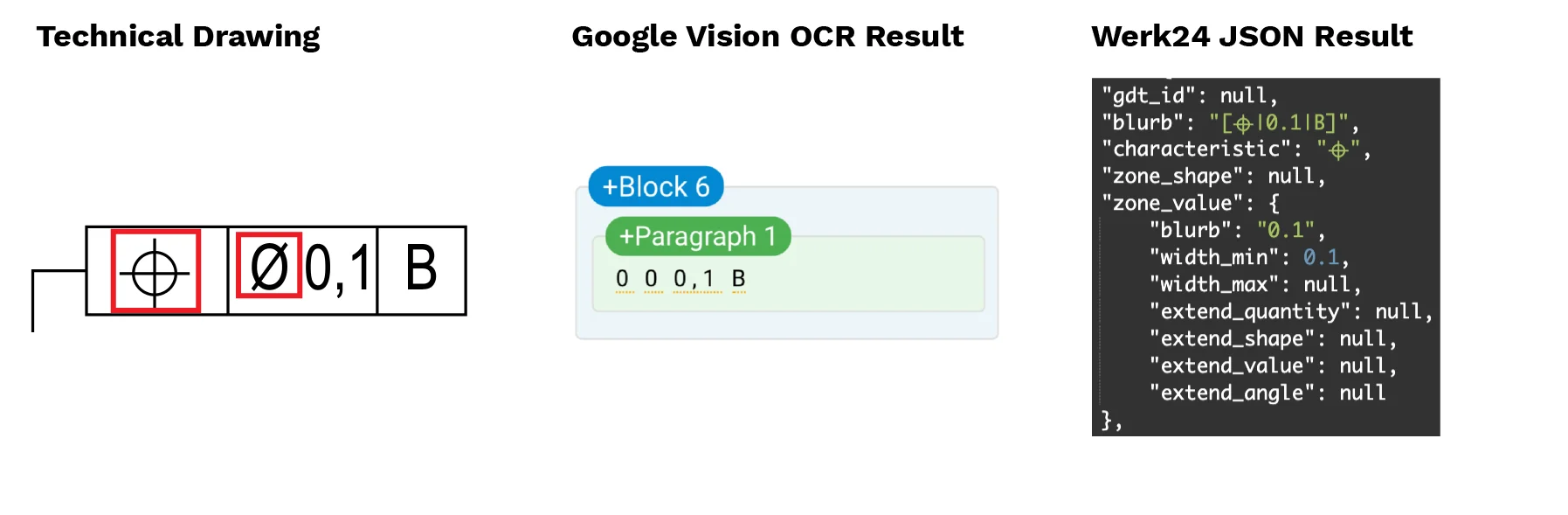
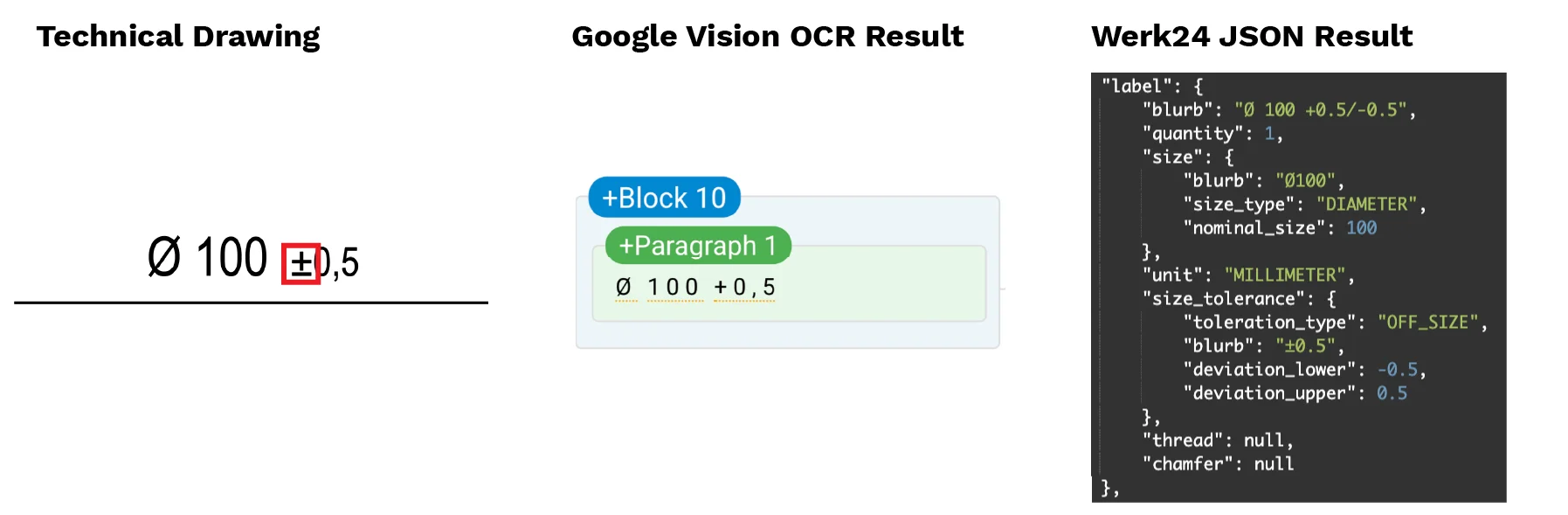
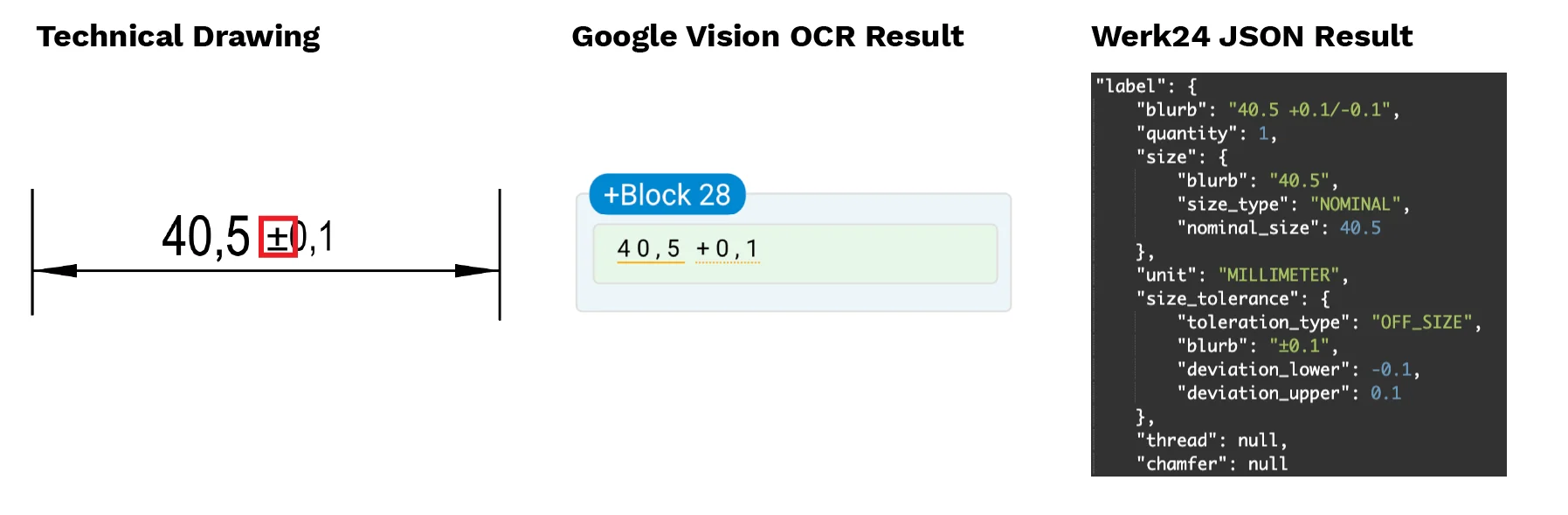
Werk24’s AI technology is designed specifically for the complexities of technical drawings. The images below show how the Werk24 API differs from traditional OCR, followed by detailed reasons explaining how it stands out against the former:
[caption id="" align="alignnone" width="2499"]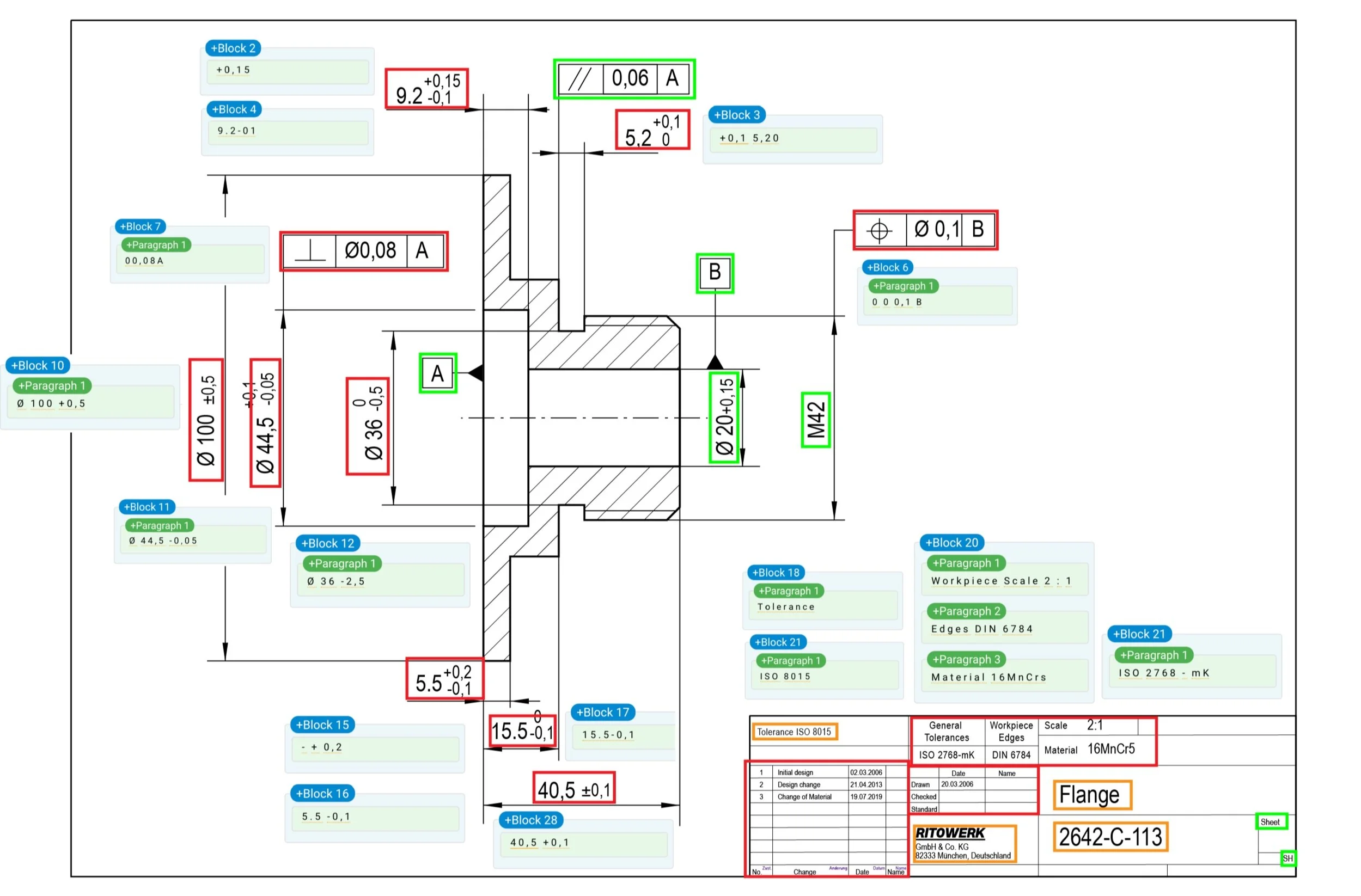 Google Vision OCR Result [/caption]
[caption id="" align="alignnone" width="2499"]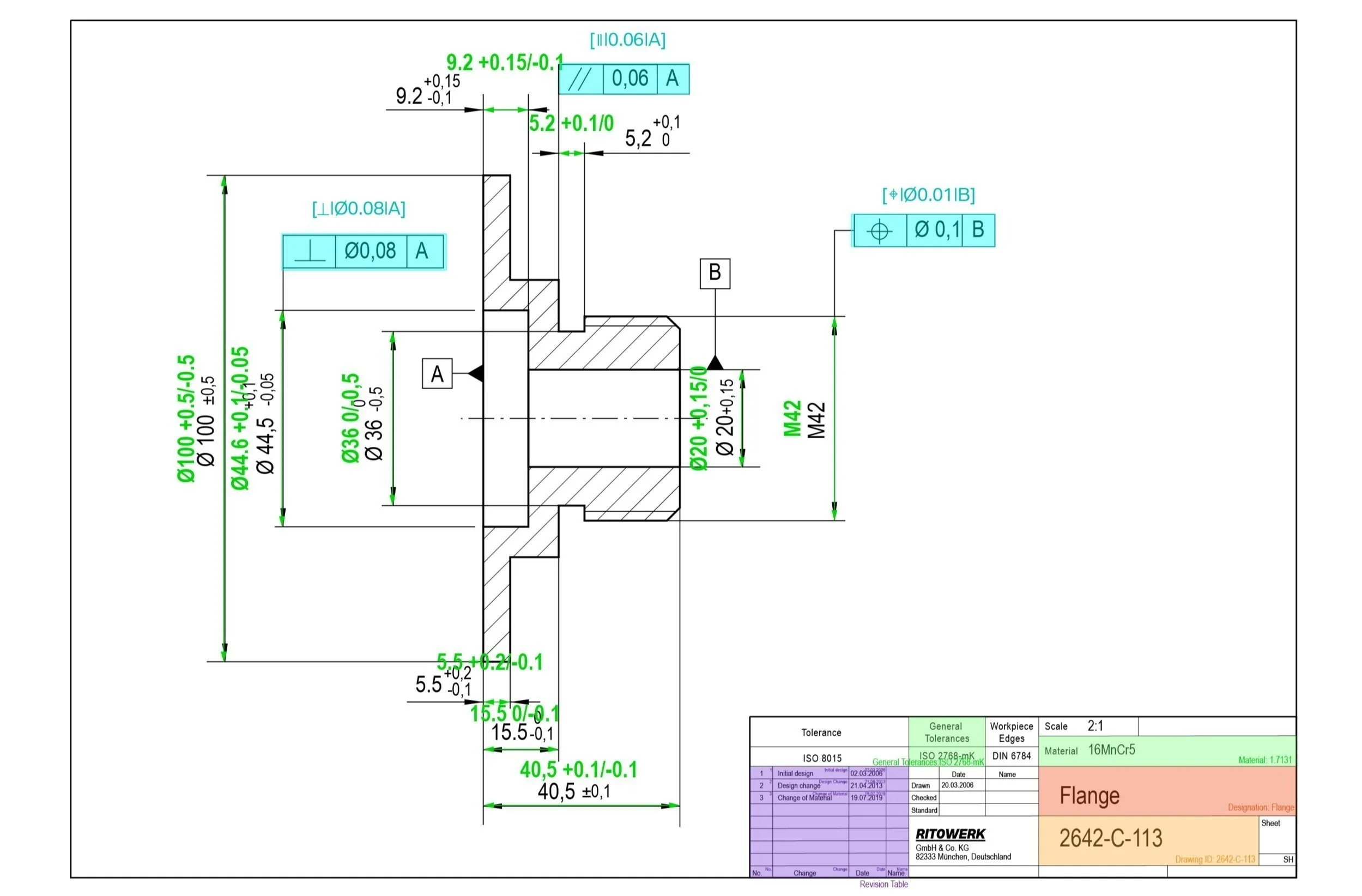 Werk24 API Result [/caption]
Structuring Text Elements
Werk24’s AI doesn’t just read text; it understands the individual meaning of each element based on its content, context and visual grouping, for example, Measures with Nominal Size, Tolerance, Fit Size and Threads. This allows it to group the right elements into structured data and return the output as JSON format, which can be utilized by machine and fed into your software system directly. Thus, allowing for seamless integration with software systems.
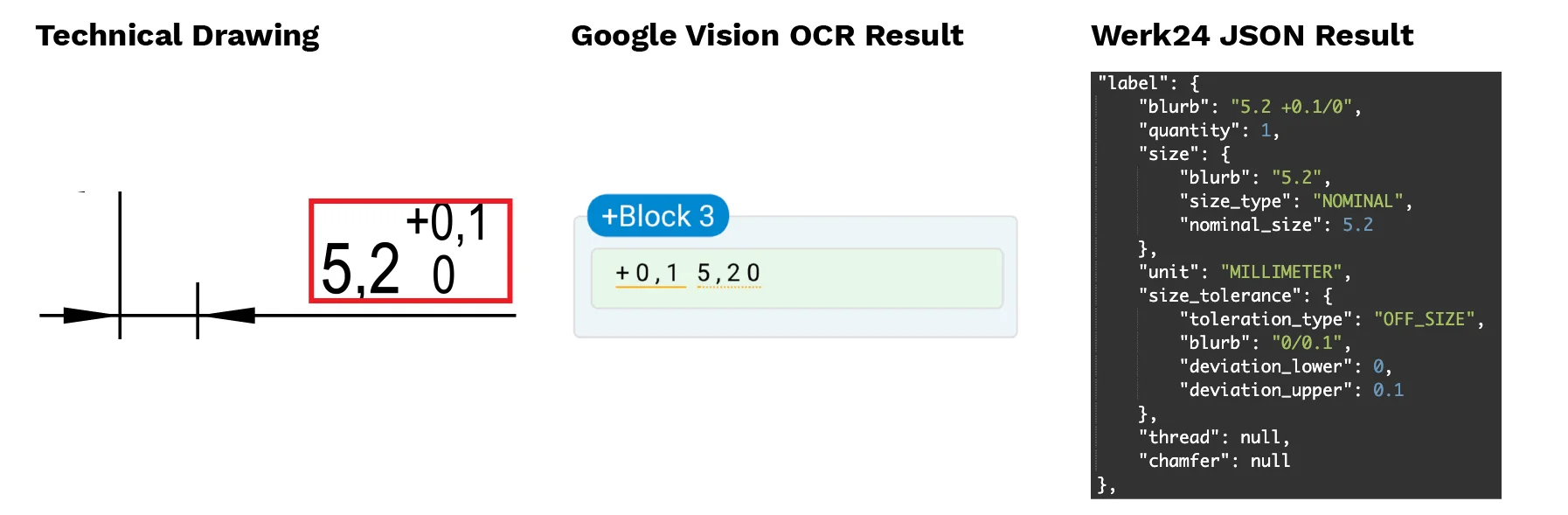
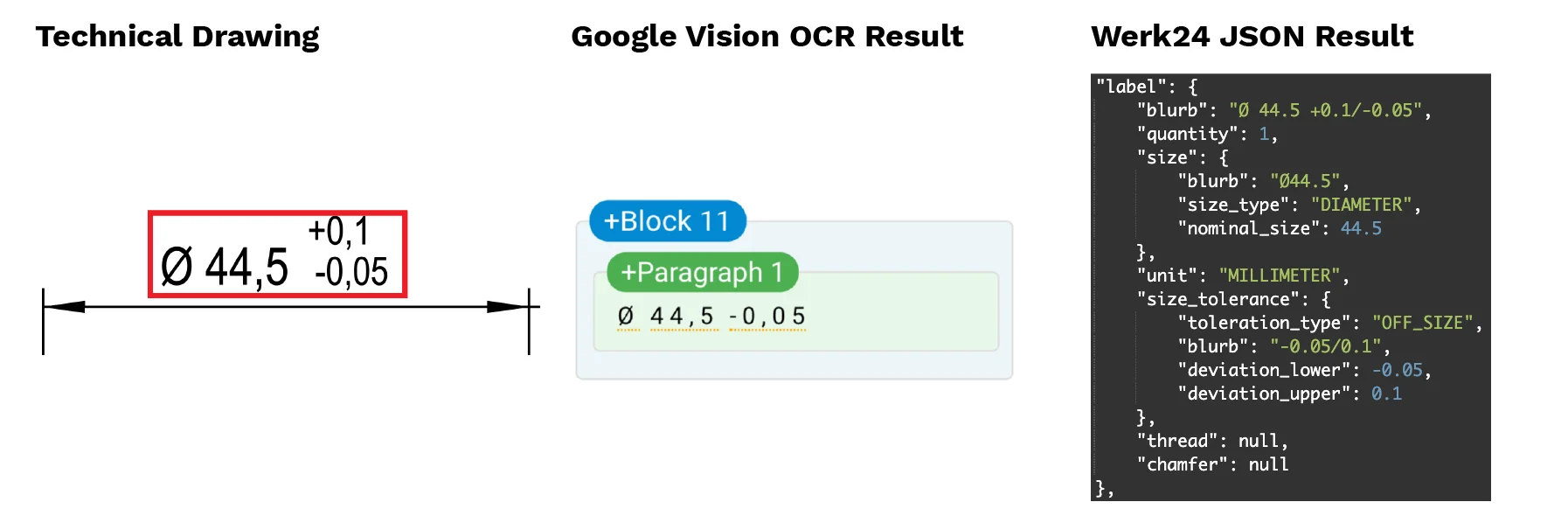
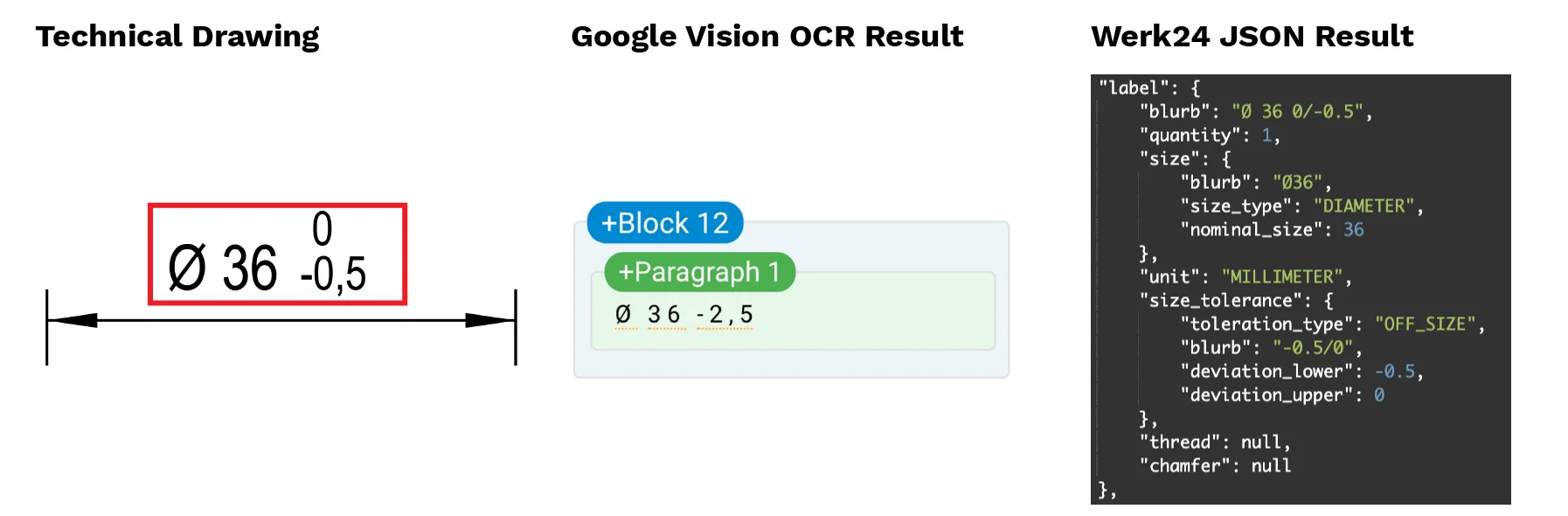
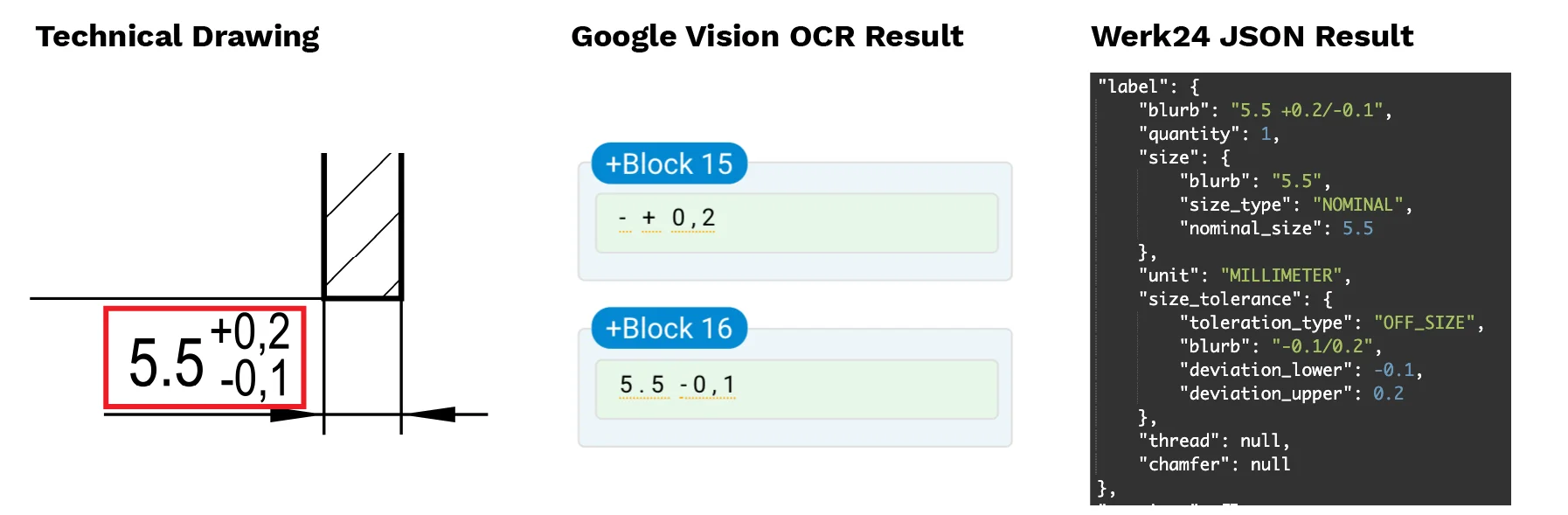
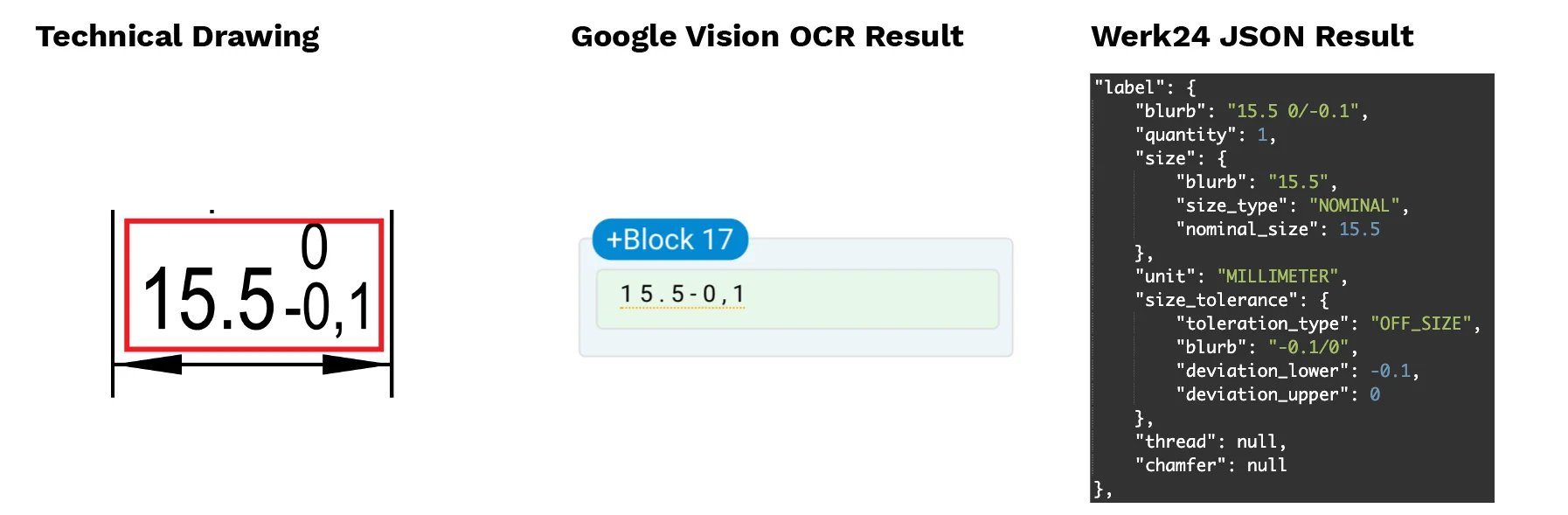
When it comes to the Title Block, Werk24’s API understands individual text and pairs the missing captions to the right text results. Consequently, your RFQ or ERP system can use such information directly.
2. Multiple Ways to Express the Same Idea
Werk24’s API recognizes the same idea being expressed in different ways, for example, it understands that SM1, CH45, and 1x45deg all mean the same: a Chamfer of length 1 and 45deg angle.
It also knows which meaning to assign to which word, depending on the context. For instance, when to consider CH45 a chamfer and when a material.
3. Context Aware Correction
OCR can often fail in differentiating numbers or characters that look alike, such as “1”, “7” and “I”, “0” and “O” or “6” and “8”. Werk24’s technology understands the meaning and context of each text element. Furthermore, it cross checks Measure Labels and Measure Lines. Therefore, it knows that a Nominal Size should be “11” instead of “17” in the situation where it looks very ambiguous and alike.
4. Recognizing Special Symbols
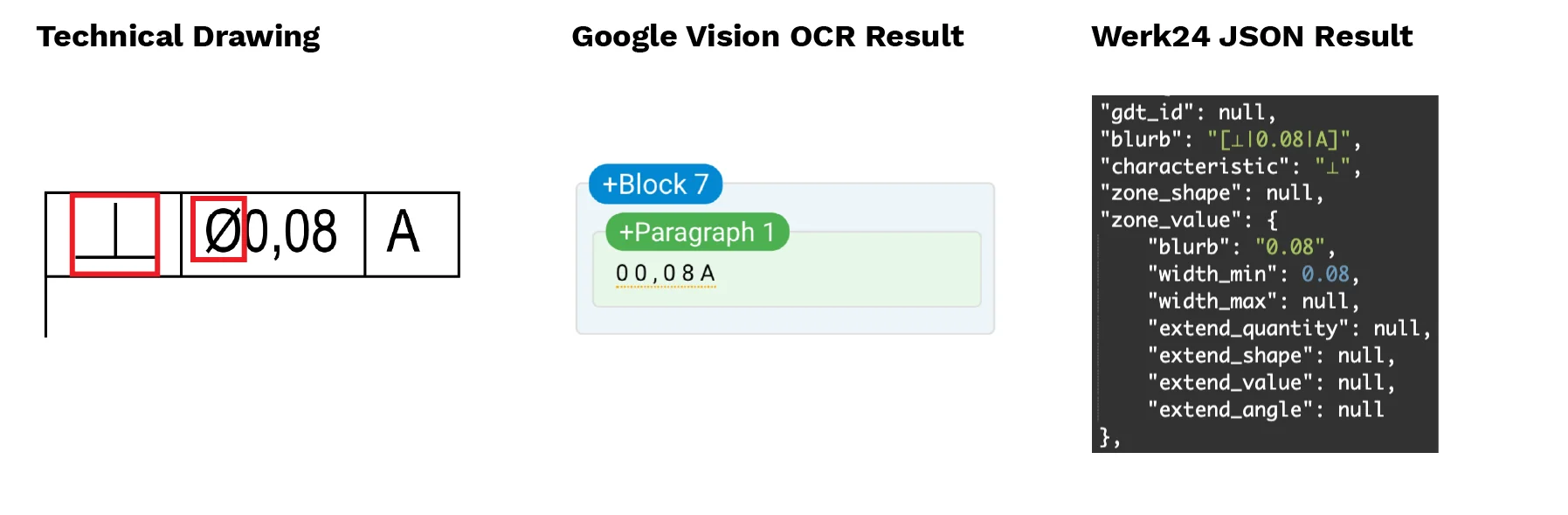
Werk24’s AI is trained to recognize GD&T symbols, mathematical symbols, like "Ø" (diameter) or "±" (tolerance), and other unique elements that OCR cannot handle. This ensures that no critical information is missed.
5. Multiple Orientations
Unlike OCR, not assuming a dominant orientation allows Werk24’s API to read Measures from each text element individually and to process text in any orientation—horizontal, vertical, or tilted.
6. Handling Complex Graphics
Even in cluttered drawings with annotations, Werk24’s API extracts text precisely. Thus, when rotation lines intersect and interfere with Measures, small text fragments can still be read with high accuracy.
Benefits of Werk24's Digitization
Werk24 doesn’t just extract data—it understands it. This leads to numerous potential benefits for manufacturers and suppliers:
Cost Savings: Automating data extraction frees employees from manual tasks, reducing labor costs.
Streamlined Processes: Digitization at the point of entry ensures a smooth workflow, from data collection to ERP integration.
Reliability: Important data including Measures, Tolerances, GD&T and Title Blocks can be reliably extracted from Technical Drawings, without errors.
Faster Quotations: All important production data in Technical Drawings is accessible in JSON format within a few seconds, thus enabling faster quotations.
New Business Opportunities: All of the above mentioned benefits eventually open doors to new customers and markets.
Thus, by automating the digitization process and making data instantly accessible and actionable, Werk24 helps you prevent inefficiencies and high costs while providing a complete, sophisticated and reliable alternative to traditional OCR solutions.
What’s Next?
In the final part of this series, we will explore the various relevant usecases for Werk24’s API and also learn how Werk24 is already helping businesses streamline their processes with its cutting-edge technology.
Contact our experts now to find out how Werk24 can make a difference to your business!